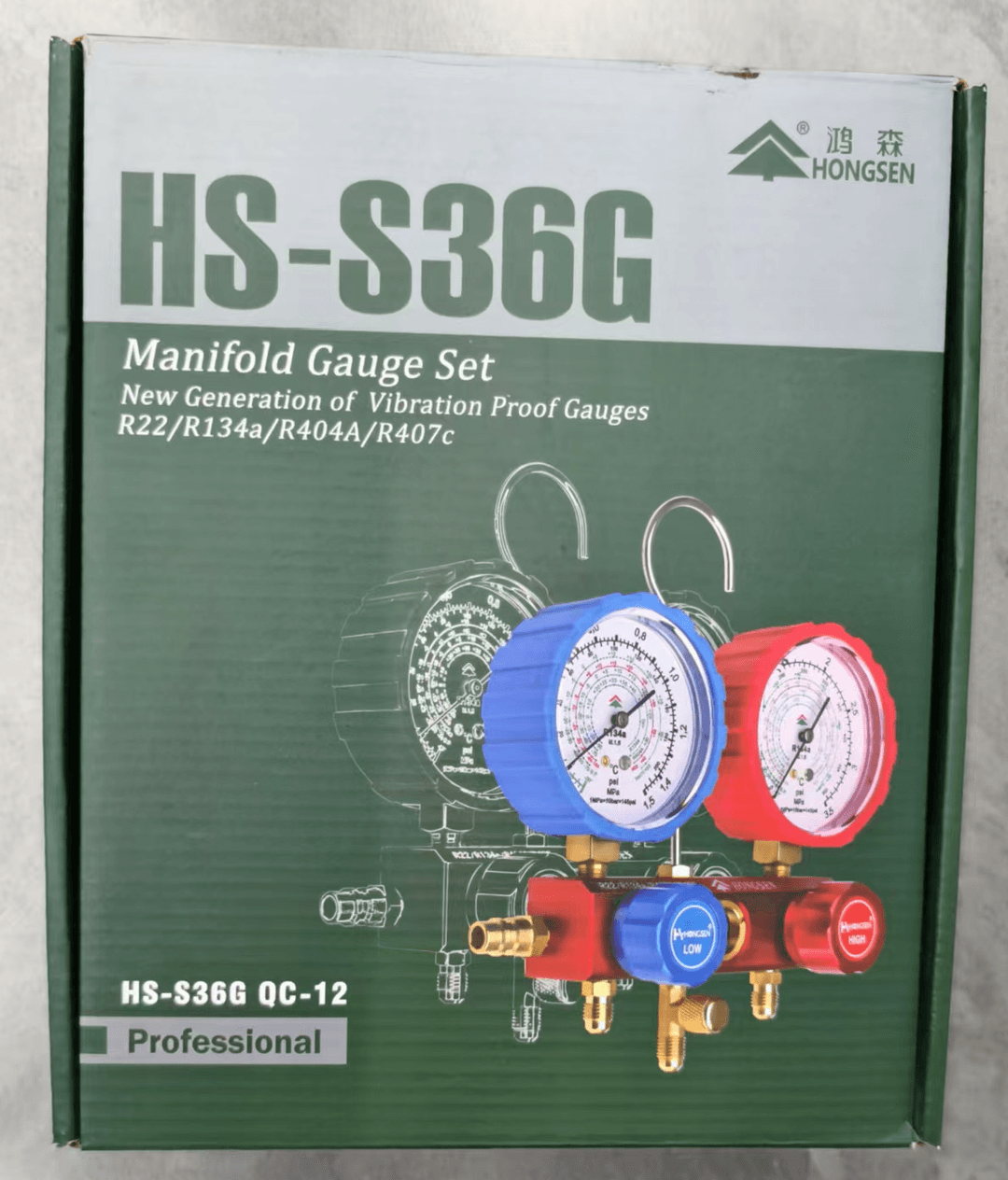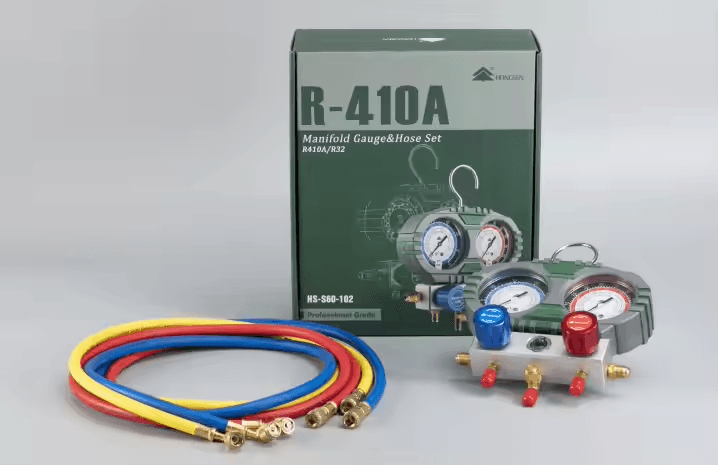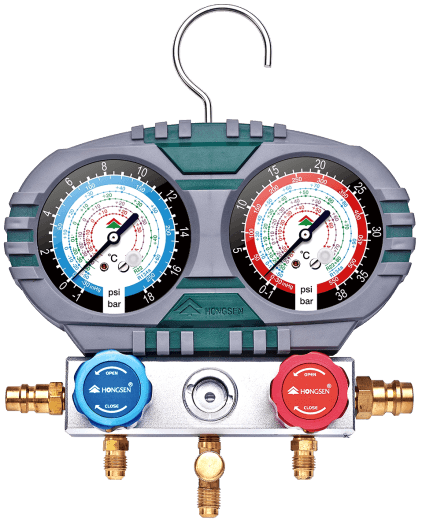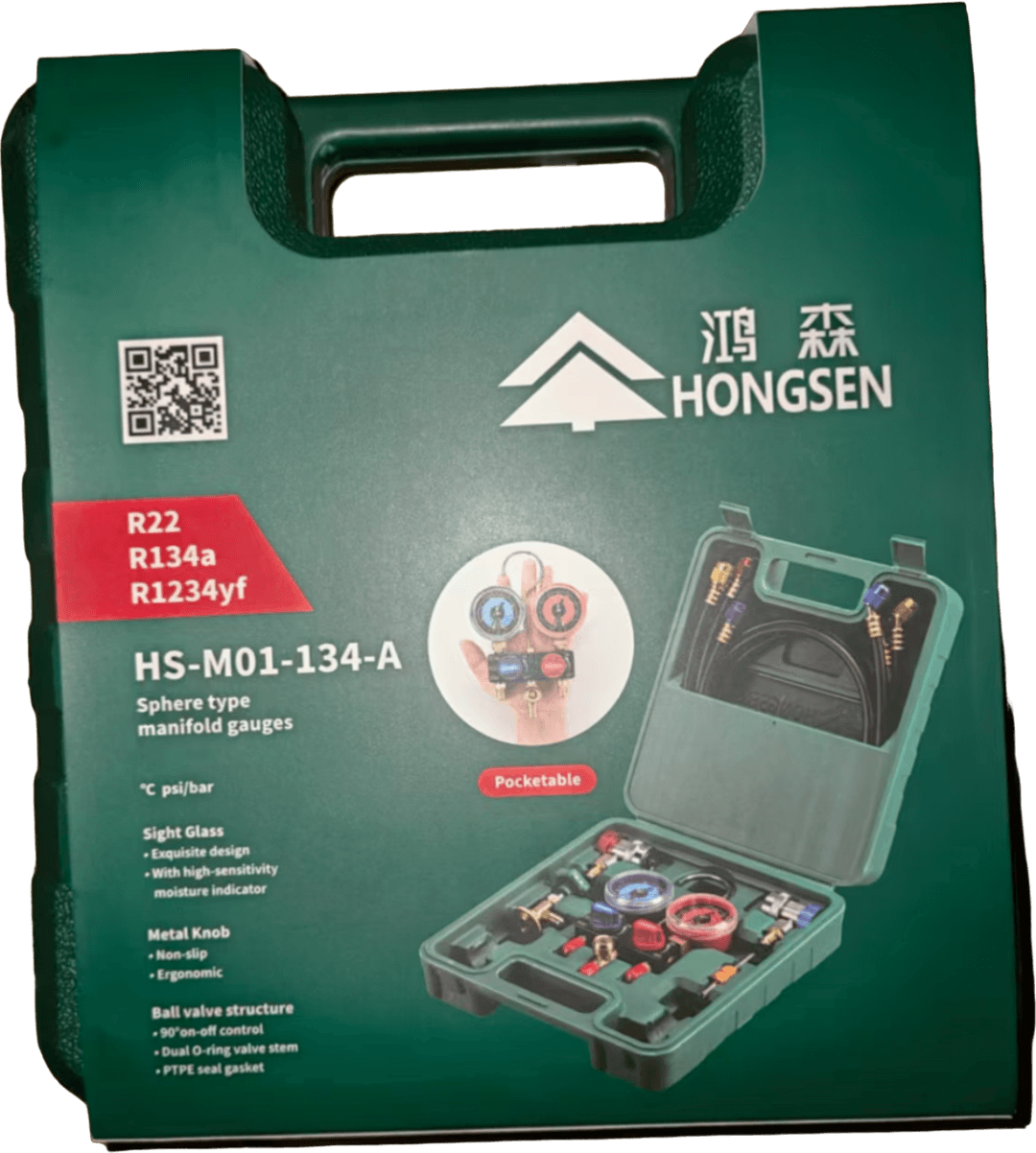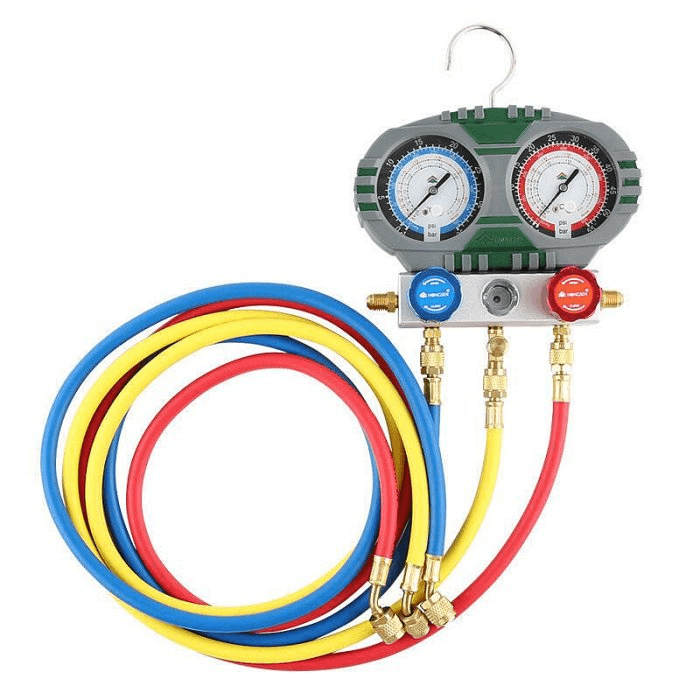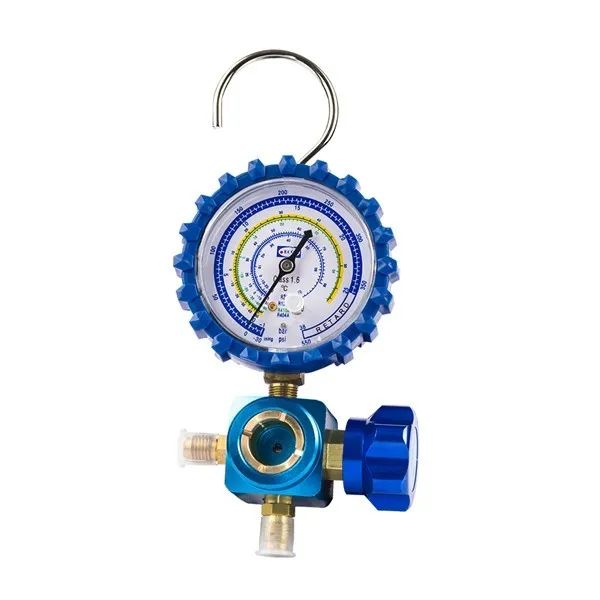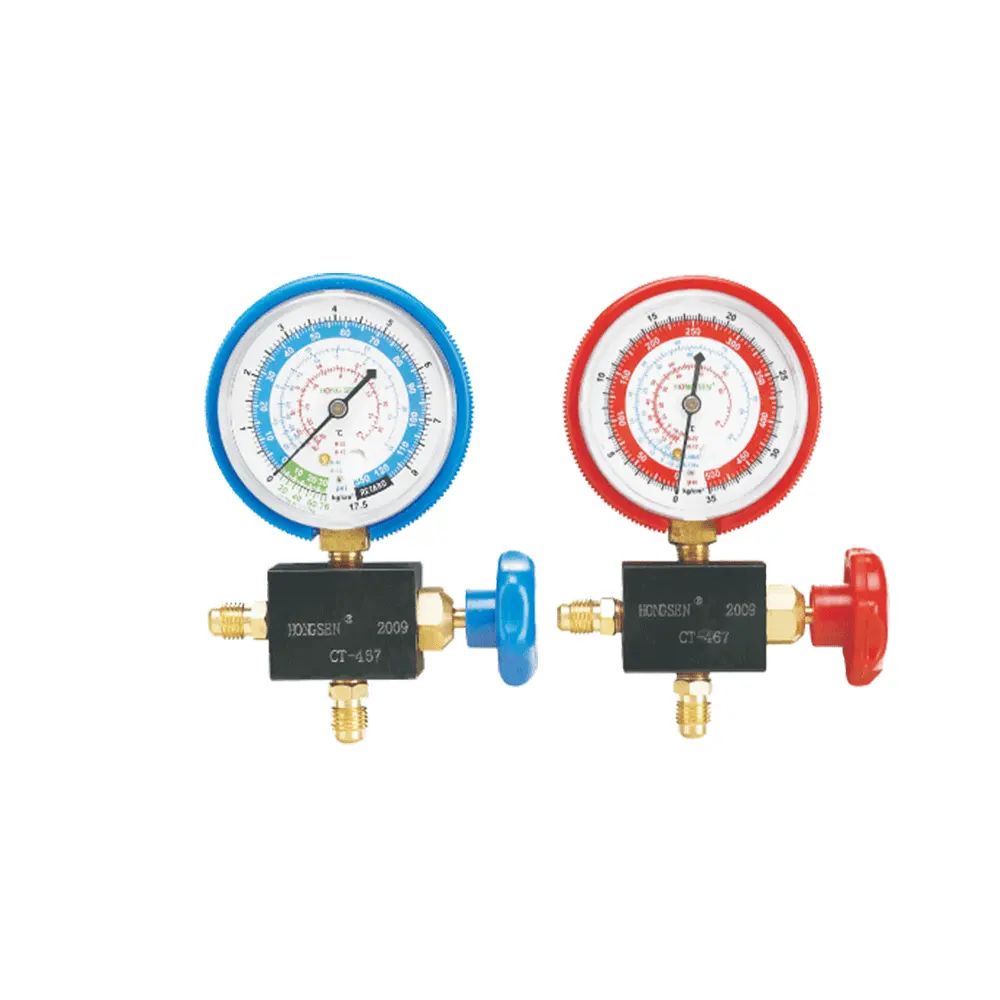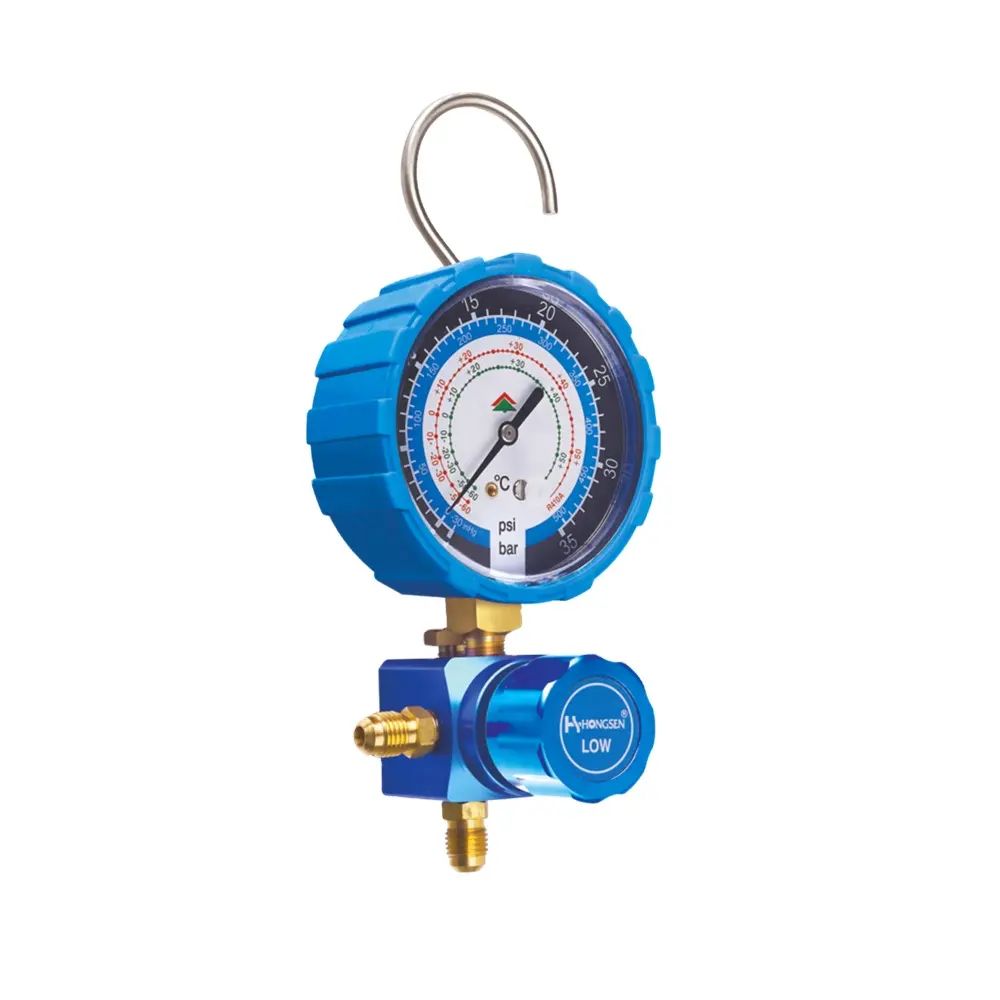


The pressure gauge is an instrument used to measure the pressure of the refrigeration system. During the installation, commissioning and maintenance of the refrigeration equipment, it can intuitively reflect the pressure status in the system and assist technicians in judging the operating status of the system.
1. Structure and principle
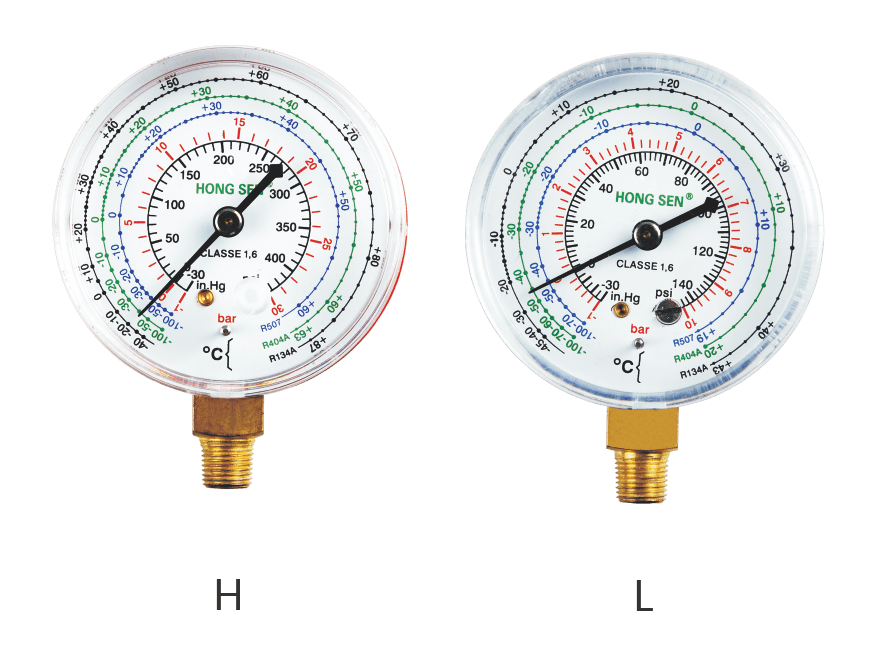
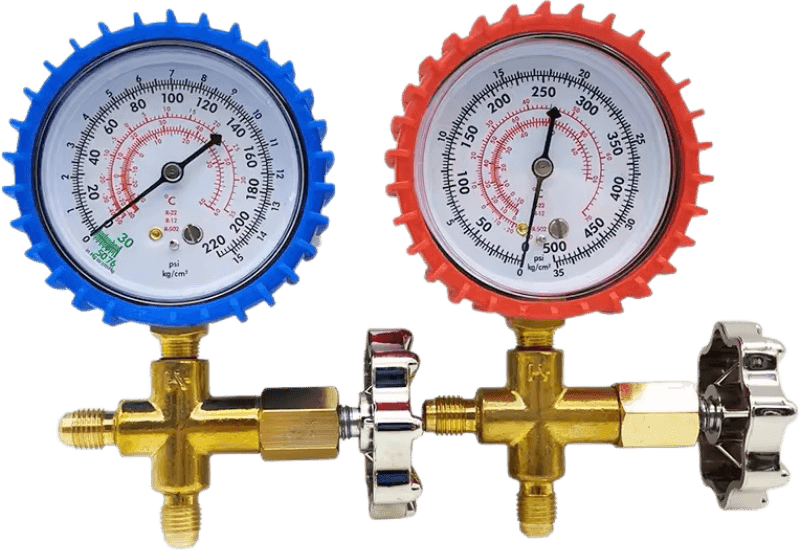
Structure: It is mainly composed of a gauge head, connecting pipe, joint, etc. The gauge head contains components such as a dial, a pointer, and a movement. The dial is marked with the pressure value and the corresponding refrigerant temperature value; the connecting pipe is used to connect the pressure gauge to the refrigeration system; the joint is adapted to the system pipeline.
Principle: It works based on the deformation principle of elastic elements. When the system pressure acts on the elastic element, the element deforms, and the pointer is driven to rotate through the transmission mechanism, indicating the corresponding pressure value on the dial.
2. Functional characteristics
Multi-unit display: The dial is often marked with a variety of pressure units, such as psi, bar, MPa, kg/cm², etc., which is convenient for users with different habits to read.
Temperature-related scale: In addition to the pressure scale, some pressure gauges are also marked with the corresponding refrigerant temperature scale, which is convenient for judging the system temperature status by pressure and assisting in troubleshooting.
Compatible with a variety of refrigerants: It can be adapted to a variety of common refrigerants such as R134a, R410A, R22, R600a, etc. to meet the needs of different refrigeration systems.